If you are considering hiring WEBSUMS Consulting for to hire a professional SEO consultant, find below  clear and well-founded reasons that speak in favor of this:
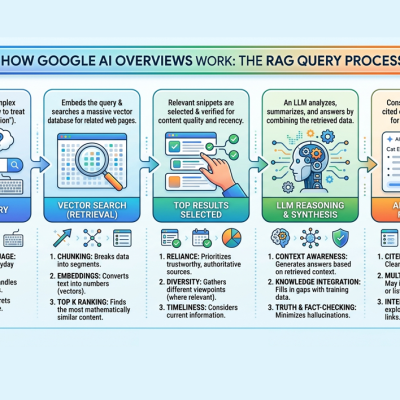
People today no longer search for information only through classic Google or Seznam searches. They are increasingly asking questions directly in AI applications such as ChatGPT, Gemini, Perplexity or using answers generated by Google’s artificial intelligence (see image below). Don’t miss the train and ensure that customers also find your brand, products or services through AI answers. You can only achieve this today if you count not only on classic search engines, but also on AI tools when optimizing your website. Let’s talk about how to do it!
AI is already widely used by almost all users on the Internet. Whether intentionally or through browsers that have implemented AI into their tools. What does this mean for us and how to work with AI tools appropriately? This does not mean that we should throw away everything we have learned about SEO in recent years. Quite the opposite! Well-done SEO is still an important basis for visibility in the era of artificial intelligence. What is changing is primarily the way in which users themselves search for information on the Internet, how the results are presented to them, and what other sources and signals need to be monitored when optimizing websites.
In addition to classic SEO, we are now increasingly encountering terms such as GEO (Generative Engine Optimization) , AIO or AI SEO. This is not a completely new direction or marketing tool that stands alone next to SEO, on the contrary, in practice GEO is more of a natural extension of SEO. The displayed AI-generated answer is no longer just a list of ten blue links, but a clear and concise answer with a link to the source or recommendation.
How is SEO changing in the era of artificial intelligence?
As mentioned, the basic procedures remain the same for both SEO and GEO. The website must be technically sound, searchable, indexable, fast and understandable, it must also contain quality information and have sufficient authority.
Google confirms this quite clearly in its current recommendations for generative search: basic SEO best practices remain the basis for displaying in Google Search generative features. The difference is that today we are adding additional checks and additional data sources to these steps.
Let’s take a look at the most important things together.
The technical availability of the website remains absolutely essential
It is essential that the content of the website is readable for AI robots, it must be possible to find and process it, this is the same as in classic SEO. Therefore, in BoonsSEO Digital Marketing Freelancer in Hyderabad we always check, for example, indexing, loading speed, mobile usability, internal linking, duplicates, correct URL addresses or technical errors that could prevent robots from accessing the content. We always check, for example, indexing, loading speed, mobile usability, internal linking, duplicates, correct URL addresses, or technical errors that could prevent robots from accessing the content.
Since the advent of AI, it is necessary to work with the web a little more technically. The key content of the website should be available in the cleanest and most understandable HTML form. For sites that rely heavily on JavaScript, it is not appropriate to automatically assume that every crawler or AI agent can process the page as well as a modern web browser. For websites heavily dependent on JavaScript, it is not appropriate to automatically assume that every crawler or AI agent can process the page as well as a modern web browser.
For example, Googlebot can render JavaScript, but Google still recommends following specific SEO rules for JavaScript sites. Other crawlers and AI systems may have significantly different processing capabilities.
Therefore, from our experience, we know that the general rule is: the fewer obstacles the robot has to overcome to get to the main content, the better.
Proper heading structure: H1, H2, and H3 are not just cosmetics for readers
The structure and content of the URL page still plays a big role. The principle is essentially the same as when you wrote a style paper in school.
The heading (i.e. H1) should clearly state what the main topic of a particular URL is.
The subheading (i.e. H2) then divides the content and topic into main areas.
H3 further specifies the individual parts.
This doesn’t mean that using the right H2 will automatically get you a citation in ChatGPT, but a well-built hierarchy makes it easier for AI bots and humans to understand what information is on the page and how it relates to each other.
The same principle applies to titles, meta descriptions, meaningful URLs, or clear division of individual parts of content.
Google continues to emphasize a clear technical website structure and well-organized content in its recommendations for generative AI.
Structured data is, but it’s not the secret key to AI
At the beginning of GEO ( AI SEO ), it was often said that the basic prerequisite for visibility in AI would be, for example, extensive FAQ sections and their marking using structured data. Today, this is done differently.
Structured data still has its place, as it helps AI tools easily describe, for example, a product, company, article, author, or other information. However, it is not confirmed that the special Schema.org markup would be a condition for display in generative answers.
Google, on the other hand, explicitly states that its AI features do not require any special AI markup , special schema, or, for example, a separate file like llms.txt. Likewise, it is not necessary to add an artificial FAQ to every URL just to make it “more readable for AI.” Source: Google
However, if you have real and frequent customer questions, an FAQ certainly makes sense. It helps the user expand the page with relevant information and can better cover specific topics. However, it is not automatically a shortcut to AI answers.
💡 Other structured data, such as information about products, services, organization, or reviews, is still very important for search engines, other systems, and customers to clearly understand the content of the page.
We also control the access of AI crawlers
In addition to Googlebot, it also makes sense to check whether the website is unnecessarily blocking bots used by AI services.
For example, OpenAI (ChatGPT) distinguishes several different crawlers
OAI-SearchBot is used to search and display web pages in ChatGPT Search results, while GPTBot is related to the possible use of content for training generative models. Both accesses can be managed separately. For example, a website can allow OAI-SearchBot access for search while simultaneously disabling GPTBot.
💡 Our tip: Today, it is no longer enough to ask the question: “Does Google see our website?” during an SEO/GEO audit.
We should rather ask: “Which other systems can access our content and which ones do we block?” – Michaela Novotná , SEO/GEO specialist at BoonsSEO Digital Marketing Freelancer in Hyderabad
With the advent of AI, we are moving from keyword analysis to prompt analysis.
Keyword analysis is definitely not over, and we still need to know what people are searching for, what topics they are interested in, how much they are searched for, and what types of search intent are emerging around a particular product or service. Keyword analysis just adds another layer:the prompts, or questions that people ask artificial intelligence.
For a better idea:
In the Google search engine, a person can type: ” SEO agency Prague “
But in ChatGPT he asks: “Recommend me an agency in Prague that specializes in SEO for smaller e-shops and also solves optimization for AI.”
The user no longer types a few keywords, but directly describes the entire problem, their requirements, budget or specific situation.
We work not only with keywords, but also with relevant questions and groups of prompts. But be careful, we are not trying to generate hundreds of artificial questions and create a new page for each one (Google directly warns against creating a large number of pages just for query variants). The goal of our prompt analysis is to understand what customers are really asking, what answers they are getting, and where the information that your website can offer is currently missing.
AI visibility measurement tools already allow you to track specific prompts, compare a brand to its competitors, and analyze the sources that individual AI systems draw from. For example, in 2026, Marketing Miner expanded its measurement to include regular monitoring of ChatGPT, Gemini, Perplexity, AI Overviews, and AI Mode.
The content must be of high quality and answer questions, not just contain keywords
Prompt analysis is also related to the way we prepare blog articles and other content for the web today. While keywords are still important, simply inserting the exact phrase in the H1, title, and a few paragraphs is not enough.
How to write blog articles? Today, with the advent of AI, we need a page or blog article to really cover the topic, answer important questions, and offer the information the customer needs to make a decision.
If a user is considering, for example, nose surgery, they will probably not only be interested in the definition of rhinoplasty. They will ask about the procedure, recovery, risks, results, appropriate age, price or differences between individual methods. Therefore, a quality URL must have sufficient information depth. And these principles work for both classic SEO and GEO.
💡 Our tip: This is also why blog articles are still very important. You cover topics comprehensively and have much more space to elaborate on a given issue in a blog article.
Content relevance is becoming even more important
AI tools can combine information from different sources in their answers and use web search for current queries. If you have outdated prices, services, team information, or an expert article on your website that hasn’t been updated in years, you are not only reducing its value to the customer, but also the credibility of the source itself.
Therefore, it is even more worthwhile today to regularly revise existing content , correct outdated information and add new experiences, data or changes in the field. From our experience, we know that it is not always necessary to write another new article, often it is more valuable to significantly improve the one that you have already had on the website for several years.
AI doesn’t perceive a brand based solely on its website
One important change with the advent of AI is that AI systems draw information not only from your own website, but also from other external sources where your brand, products or services appear.
Therefore, depending on the field, it may be important, for example:
presence in relevant industry catalogs,
quality backlinks,
mentions in the media and professional magazines,
customer reviews,
Heureka or other industry comparison sites,
Google Business Profile ,
Firmy.cz ,
relevant discussion forums,
videos and a well-made YouTube channel,
or other authoritative sources related to your topic.
Google also explicitly states that its generative results can work with various types of content, including web pages, images, videos, or discussions. Source: Google
Building digital authority is no longer just about how many backlinks you have. It is important for a brand to create a consistent and trustworthy digital footprint across the places where its customers naturally move. We also discussed the connection between the two approaches in more detail in the article: GEO and SEO: what is the future of online search?
Markdown for Agents: a “translator” between the classic web and AI
One of the technically interesting tools that appeared in 2026 is Markdown for Agents from Cloudflare . Its principle is quite simple. It extracts all the content from a web page and transfers it to a text file (with the extension .md ) to make it more readable for the tools.
Web pages are created primarily for humans and their browsers. Therefore, in addition to the text itself, HTML also contains navigation, scripts, styles, various interface elements, footers, headers, and other code. For a human, the result is a nicely rendered page. However, for an AI agent, some of this code may have no value.
What does Markdown for Agents specifically do?
Markdown for Agents can be simply described as a translator that takes a regular web page and offers its cleaned text form to an AI agent . If the website uses Cloudflare and has the feature enabled, the AI agent can indicate in the HTTP request that it prefers the format:
Accept: text/markdown
Cloudflare then takes the original HTML response and automatically converts it to Markdown before passing it to the agent.
For example, the original page might remain:
# Nose surgery
## How the operation is carried out
### Convalescence
Text…
– point
– point
At the same time, this conversion removes elements that are not relevant to the content itself, such as navigation, scripts, styles, or other parts of the page. Cloudflare also preserves metadata, which it can convert to YAML frontmatter.
Why be visible in artificial intelligence responses?
Working with search engines and the entire internet has changed significantly for ordinary users with the advent of AI.
Previously, a person would type something like: “Best moisturizer for dry skin” into the Google search box.
Google then offered him a list of several links to various products and websites where he could view and purchase the cream (corresponding to the search term).
Today, a person can type a much more specific and broad question into Google or another AI-powered tool (for example: ChatGPT). For example: “I have sensitive, dry skin, I don’t want perfume, and I’m looking for a moisturizer under CZK 1,000. What would you recommend?”
Then he expects a specific answer and the selection of the ideal product for him.
From a marketing perspective, nothing changes. We still want to be seen when a customer solves a problem for which we have a solution. What changes is the form of how we get to these first positions and how our customer will read them.
The difference in search before and after the advent of AI:
In classic and organic Google search, the goal has always been to get the best possible position in the search results. This is called SEO.
In a generative AI environment, the main goal is for the AI to use your website as a primary source, mention your brand, list your product among options, or recommend you as a relevant solution. This is called GEO.
These two search methods are becoming increasingly interconnected. Google has AI Overviews and AI Mode, and generative answers are gradually becoming a direct part of classic search. Google itself describes the increasing use of generative AI experiences in information search in 2026.